Code for Impact
A Six-Month U.S.–Nepal Tech Innovation Journey Across All Seven Provinces
35 Teams · 14 Semi Finalists · 7 National Finalists · 4 Winners · One national stage.
Nepal's next generation of innovators is already building.
The question is not whether ideas exist, but whether the ecosystem can support what comes after. Code for Impact is a six-month innovation program supporting young technologists and early-stage founders as they move from ideas to tested, real-world solutions.
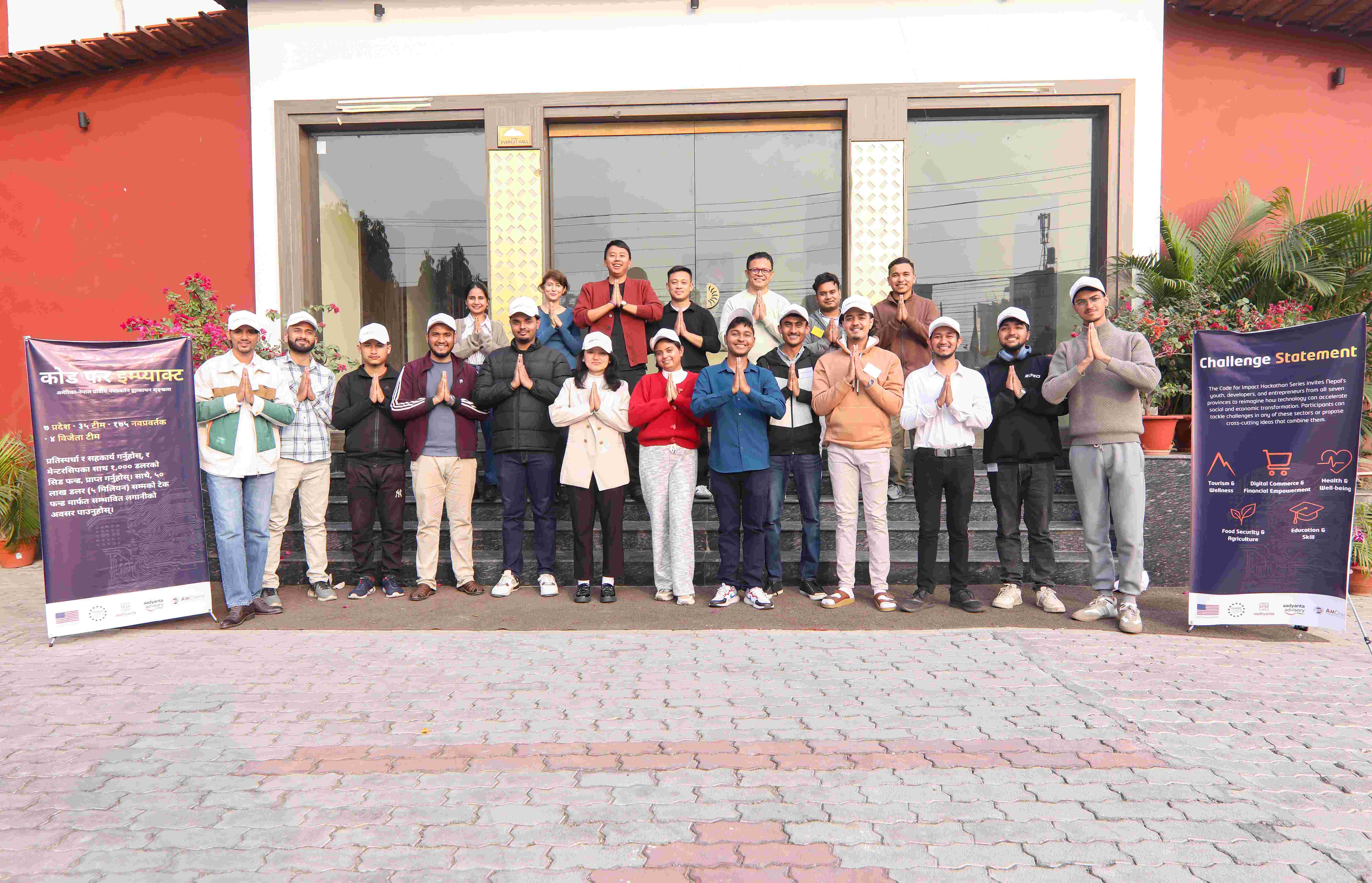
Spanning all seven provinces of Nepal, the program brings together structured learning, provincial hackathons, sustained mentorship, and national-level visibility.
Why Code for Impact
Nepal has no shortage of talent, ambition, or ideas. What is often missing is structured support between early-stage innovation and real-world implementation.
Most hackathons end at demo day. Teams build quickly, present once, and move on. The solutions rarely reach users.
Code for Impact was designed to change that pattern.
The program is built around a simple progression: build, test, learn, refine.
Participants are not only building solutions. They are learning how to build responsibly for real contexts.
Validation over assumption
Mentorship over one-time competition
Iteration over speed
Adoption over demonstration
Ecosystem continuity over isolated events
The Innovation Journey
Innovation rarely moves in a straight line. Code for Impact is built around a continuous process: build, test, learn, refine. Across six months, teams move through cycles of experimentation, feedback, iteration, and adaptation.
January 2026
Foundational Bootcamps
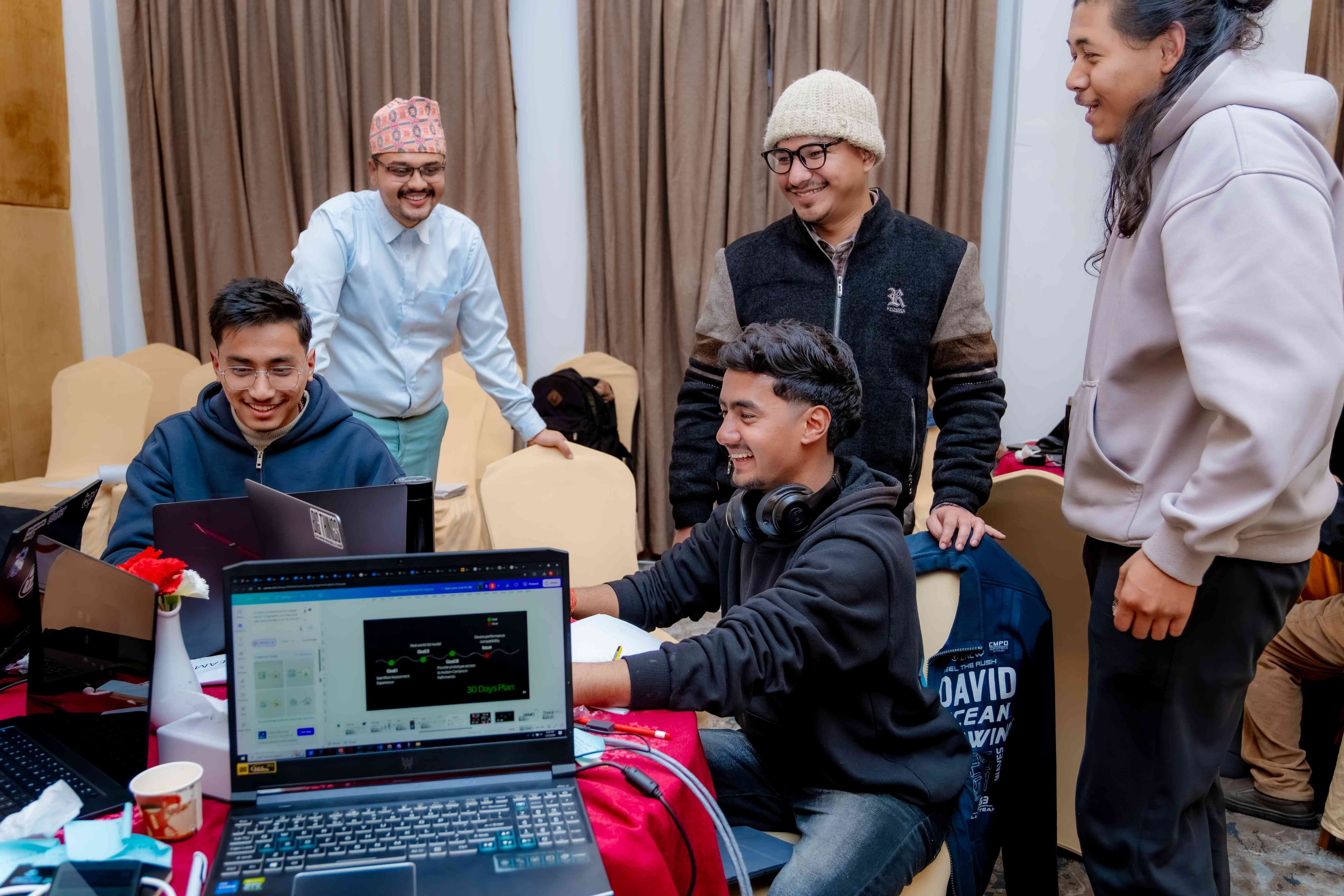
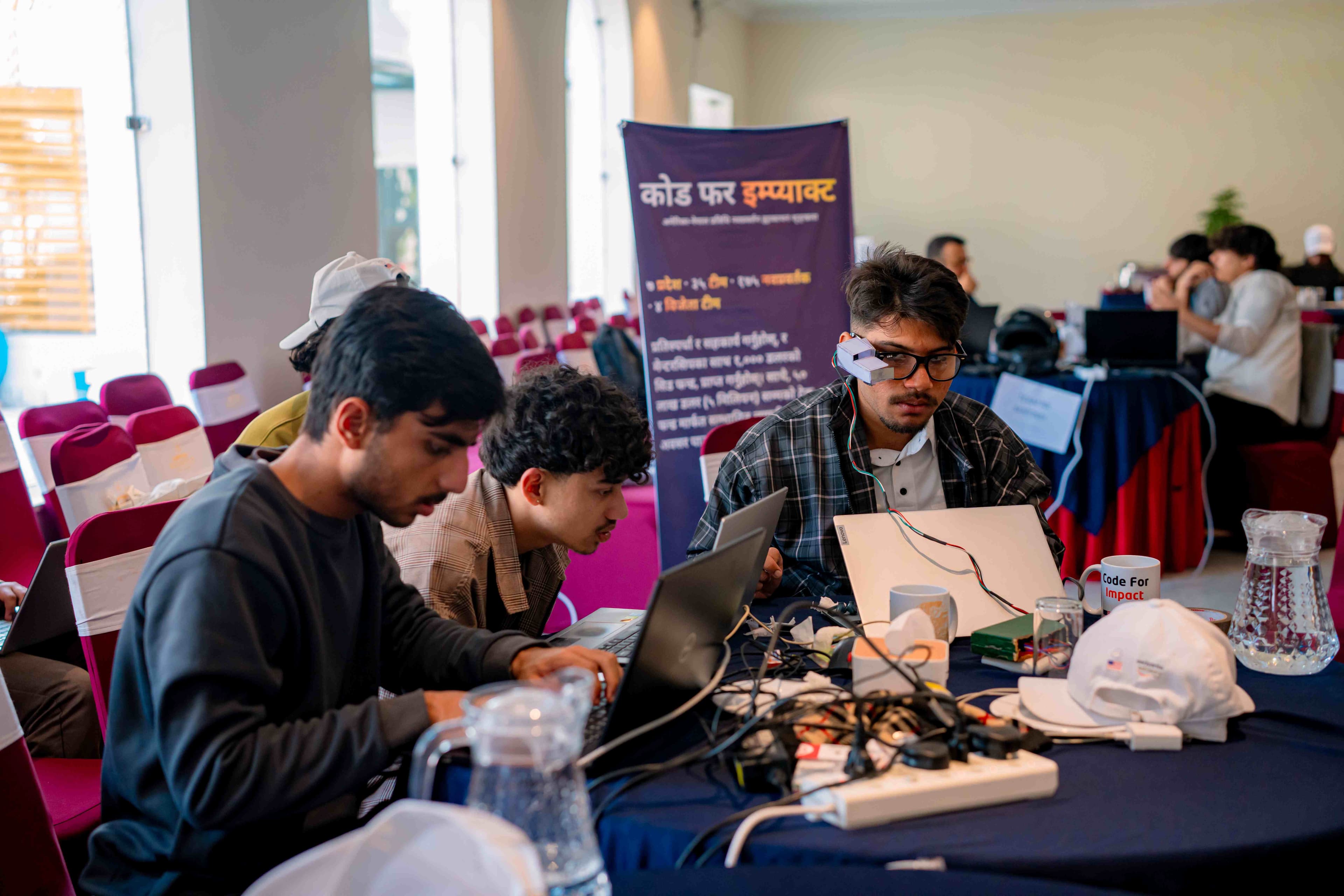
Before teams began building solutions, they began by understanding sectoral problems more clearly. Participants explored human-centered design, lean product development, market validation, and founder storytelling, grounding ideas in context before execution. The phase also brought in sectoral mentors from agriculture, health, tourism, technology, finance, and related fields, helping teams engage directly with real-world challenges and industry perspectives.
“This is by far the most earnest and engaged participation I've seen, from both youth innovators and local private sector leaders.”
“It was such a pleasure guiding young innovators as they explored digital solutions for the tourism industry. Sharing insights on the sector's rapid digitization reminded me just how much potential lies in the hands of the next generation.”
January – February 2026
Provincial Hackathons
7
Provinces
35
Teams
14
Provincial Finalists
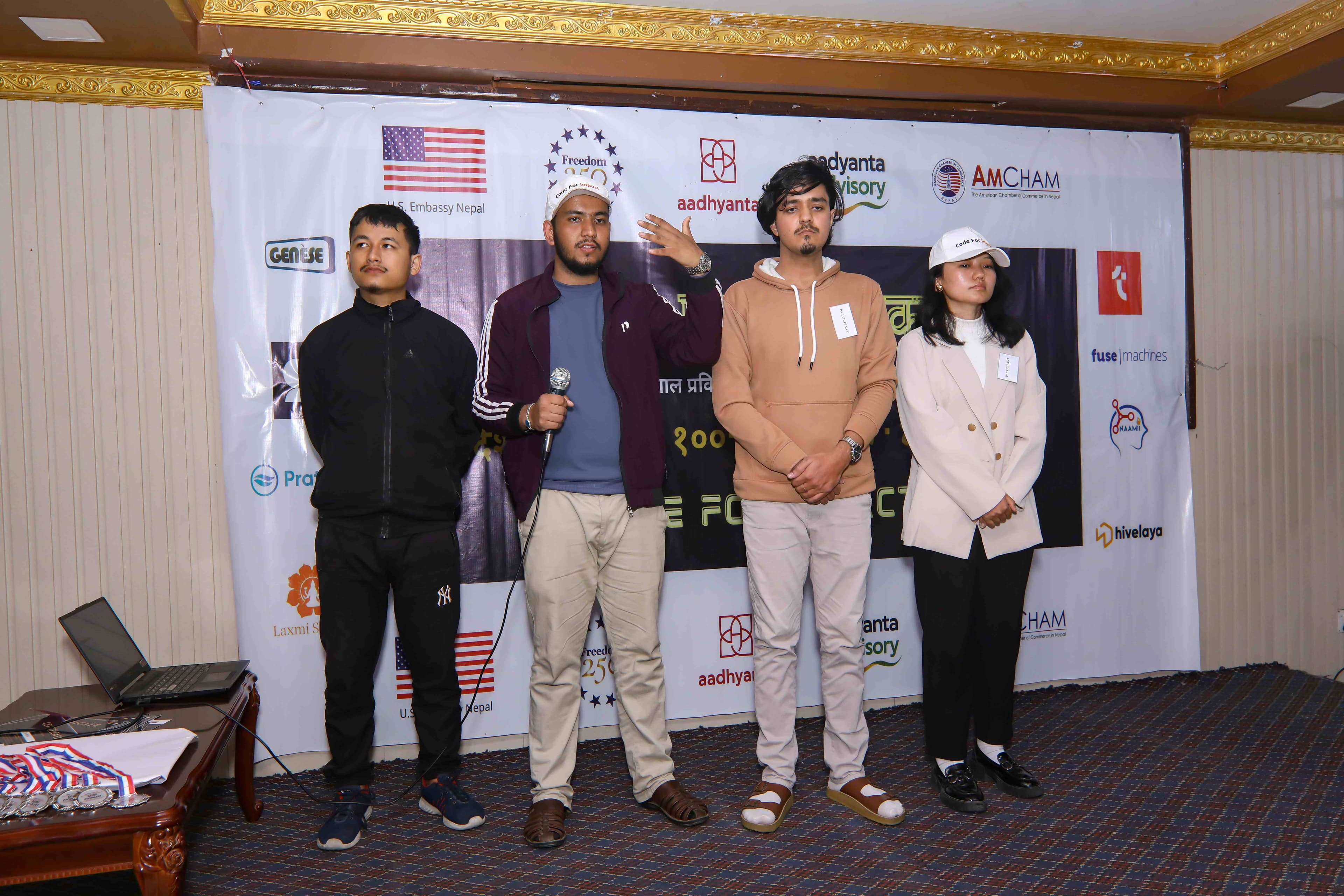
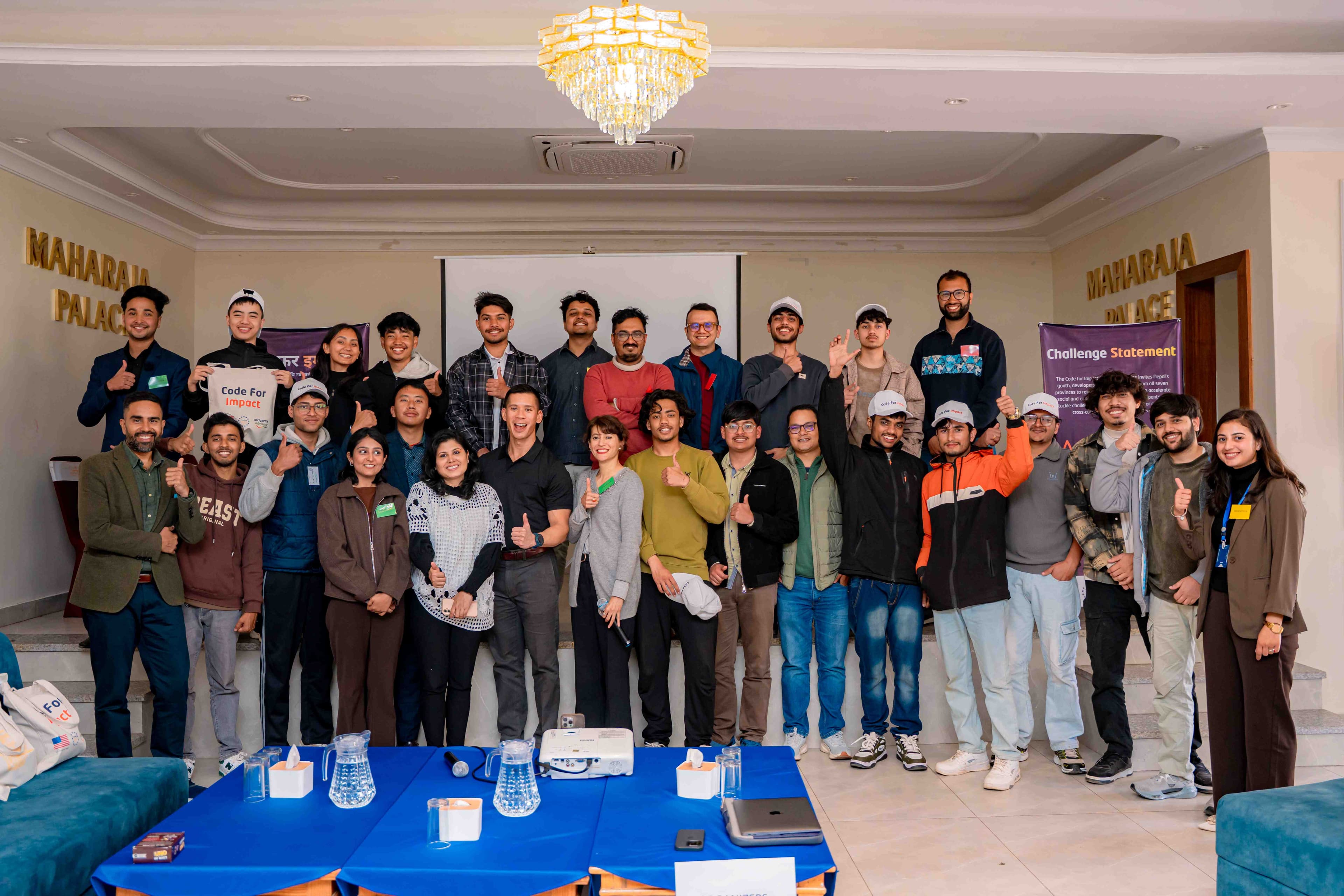
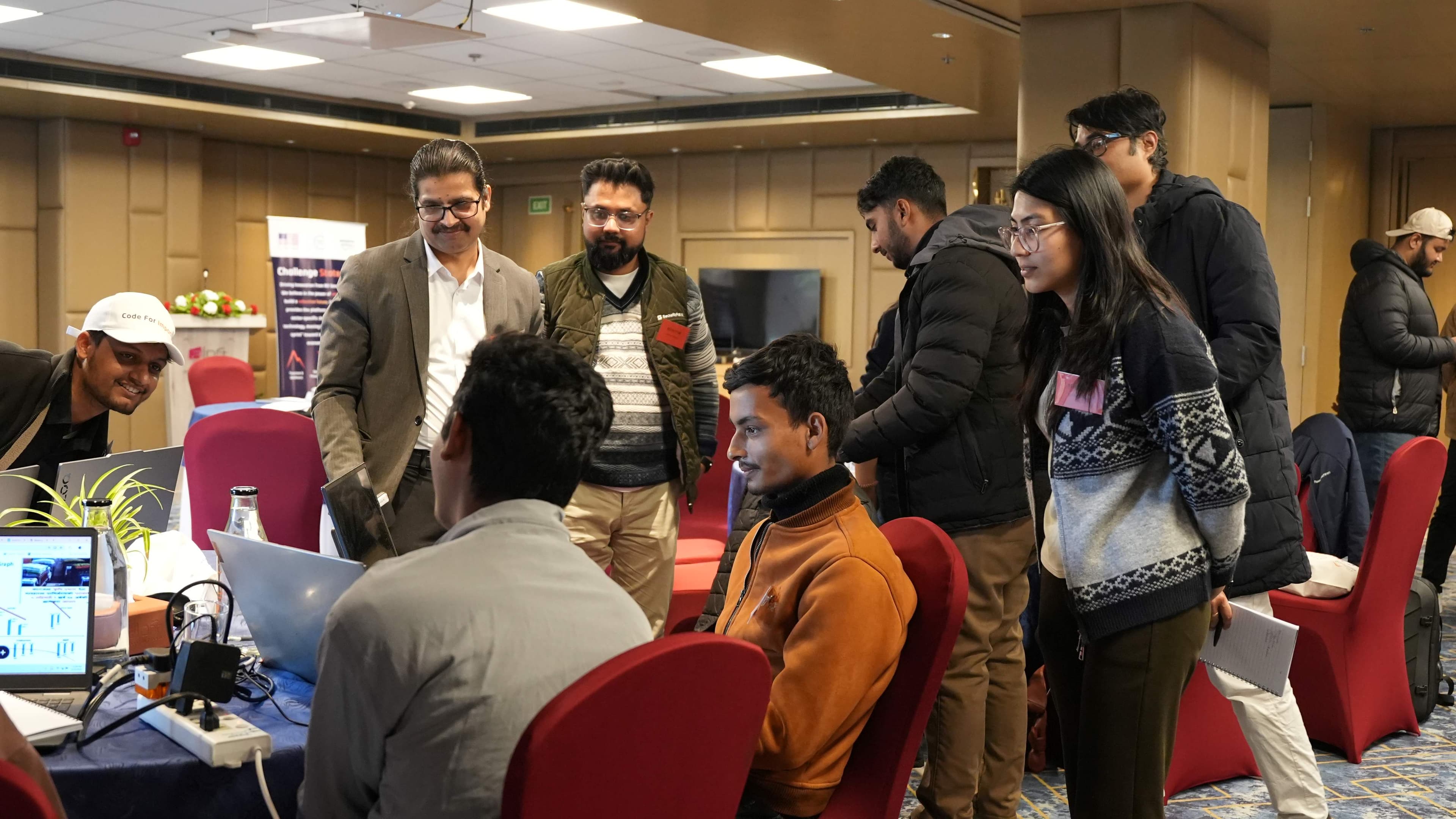
Seven provincial hackathons brought together 35 teams across Nepal to test, refine, and strengthen their ideas through mentor-guided collaboration. Rather than functioning as high-pressure competitions, the hackathons created space for experimentation, feedback, and rapid iteration.
“I appreciated seeing doctors who are also coders. That's the signal Nepal's innovation ecosystem needed.”
“What makes this hackathon one of a kind is the long-term support. In most hackathons, building the product is the end. Here, it is just the beginning.”
February – June 2026
Structured Refinement & Mentorship
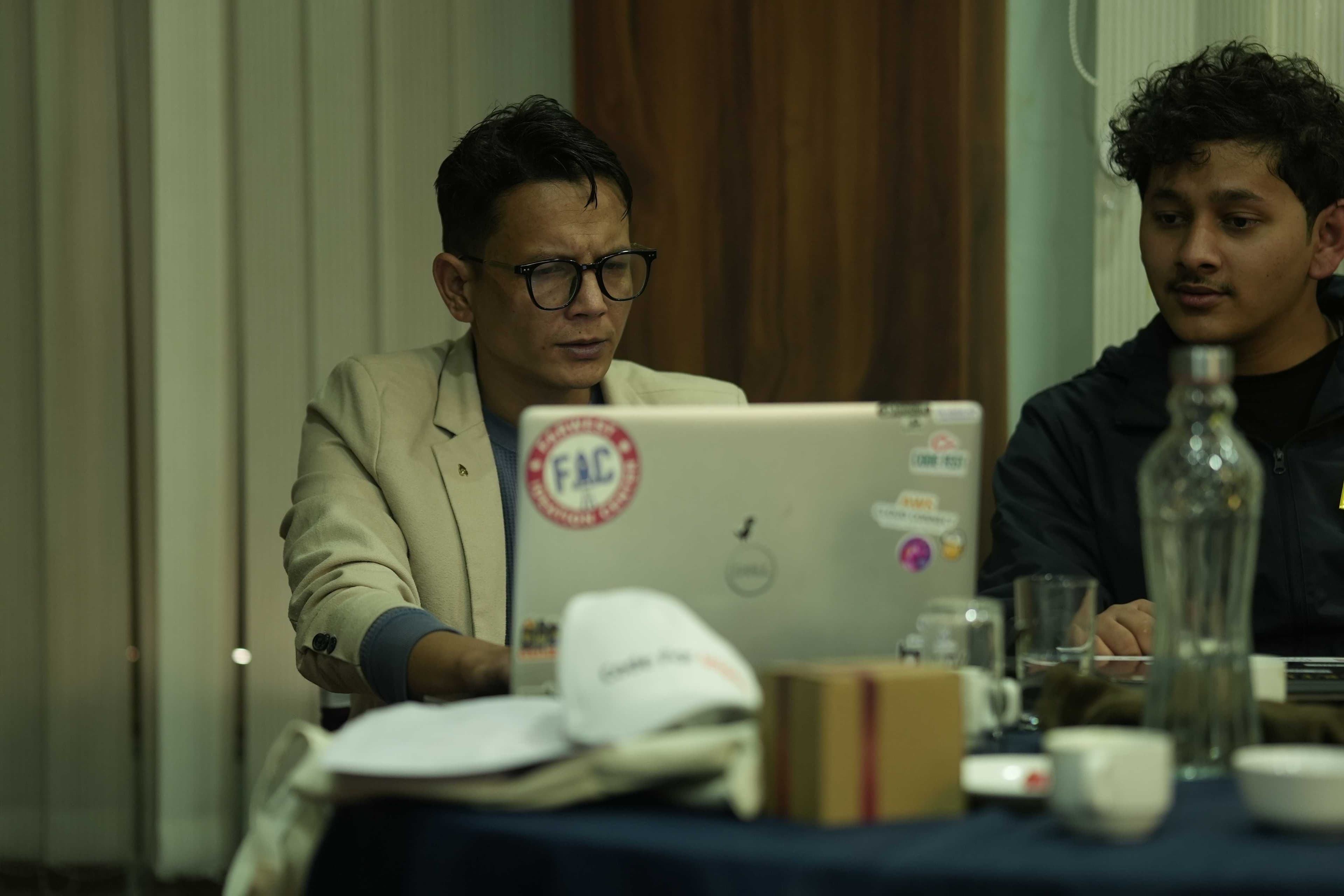
Fourteen shortlisted teams are currently engaged in structured mentorship focused on user validation, usability refinement, adoption pathways, and early business logic. Mentorship is both targeted and responsive: teams are matched with sectoral mentors based on their needs, while also participating in broader all-hands sessions across agriculture, health, tourism, technology, and finance. Alongside this, teams are actively in the field, engaging potential users and collecting real-world data to test assumptions and ground their solutions in lived realities.
“Refreshingly different. The emphasis on mentorship, refinement, and testing for real-world impact is exactly what Nepal's ecosystem needs.”
“Post-hackathon structured mentorship feedback on revenue clarity and realistic entry points led us to iterate to another validated idea—Lync, a B2B remittance API we can actually build and monetize. This type of clarity has helped us move at a faster pace than before.”
Mid June – August 2026 | Kathmandu
National Showcase & Awards
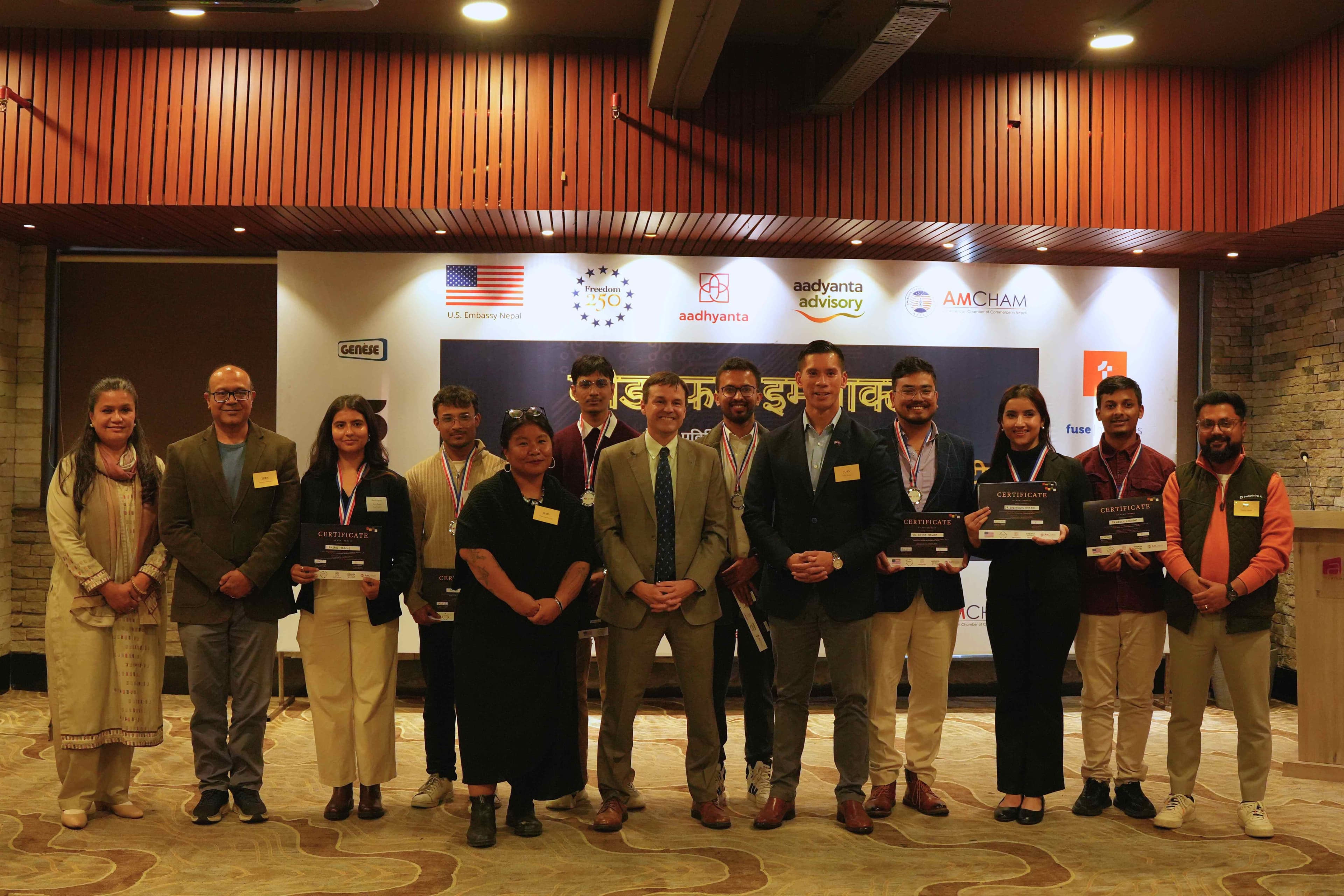
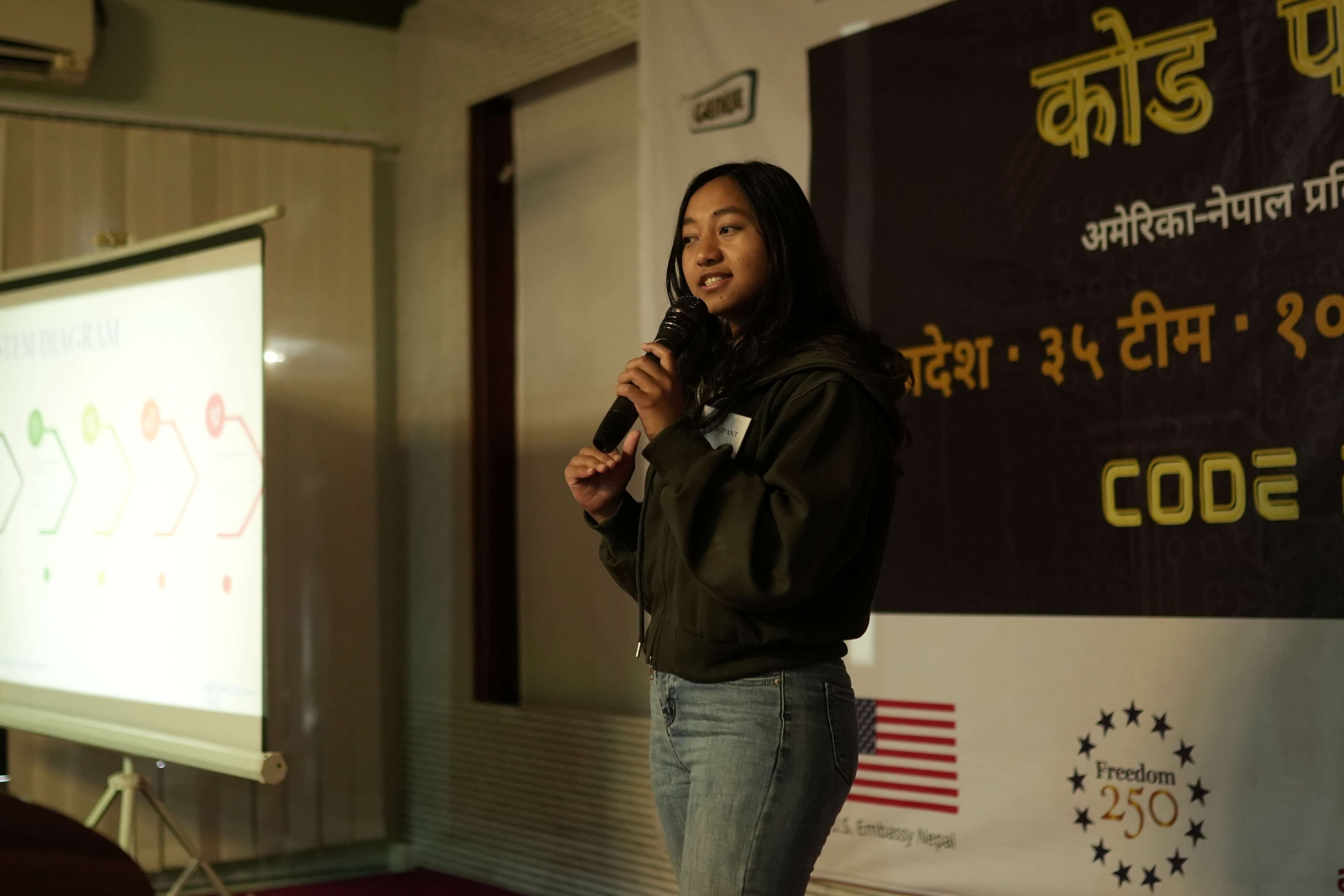
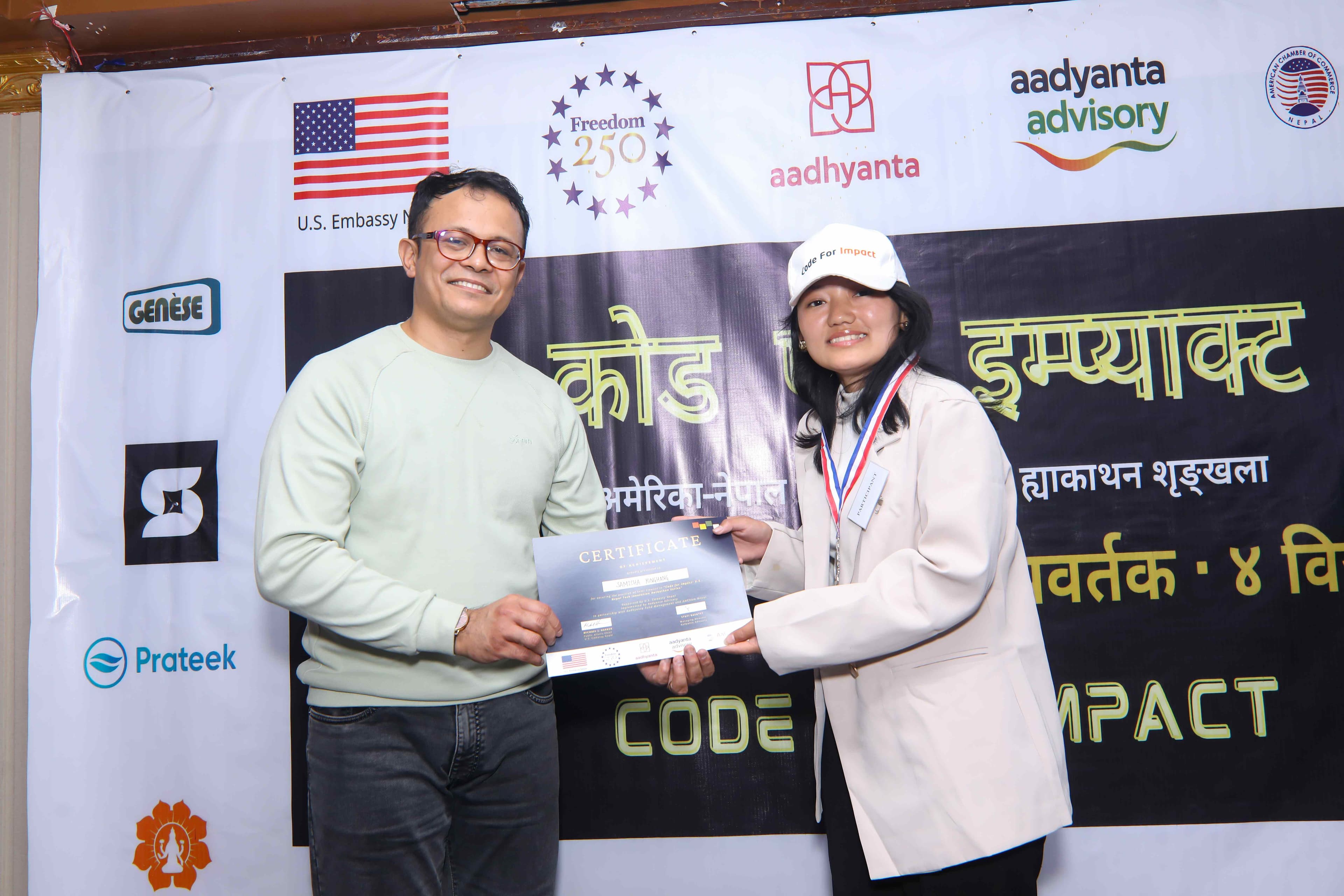
The program culminates in a national showcase in Kathmandu, where seven finalist teams present their solutions to ecosystem leaders, private sector representatives, and U.S.- and diaspora-linked stakeholders. Before the showcase, teams participate in an intensive residential sprint to refine their solutions, tighten execution gaps, and finalize their pitches. Four teams receive seed support, continued mentorship, and national recognition as Code for Impact Champions 2026. The showcase is designed not as a finish line, but as a launch point.
Meet the Innovators
From provincial builders to national finalists
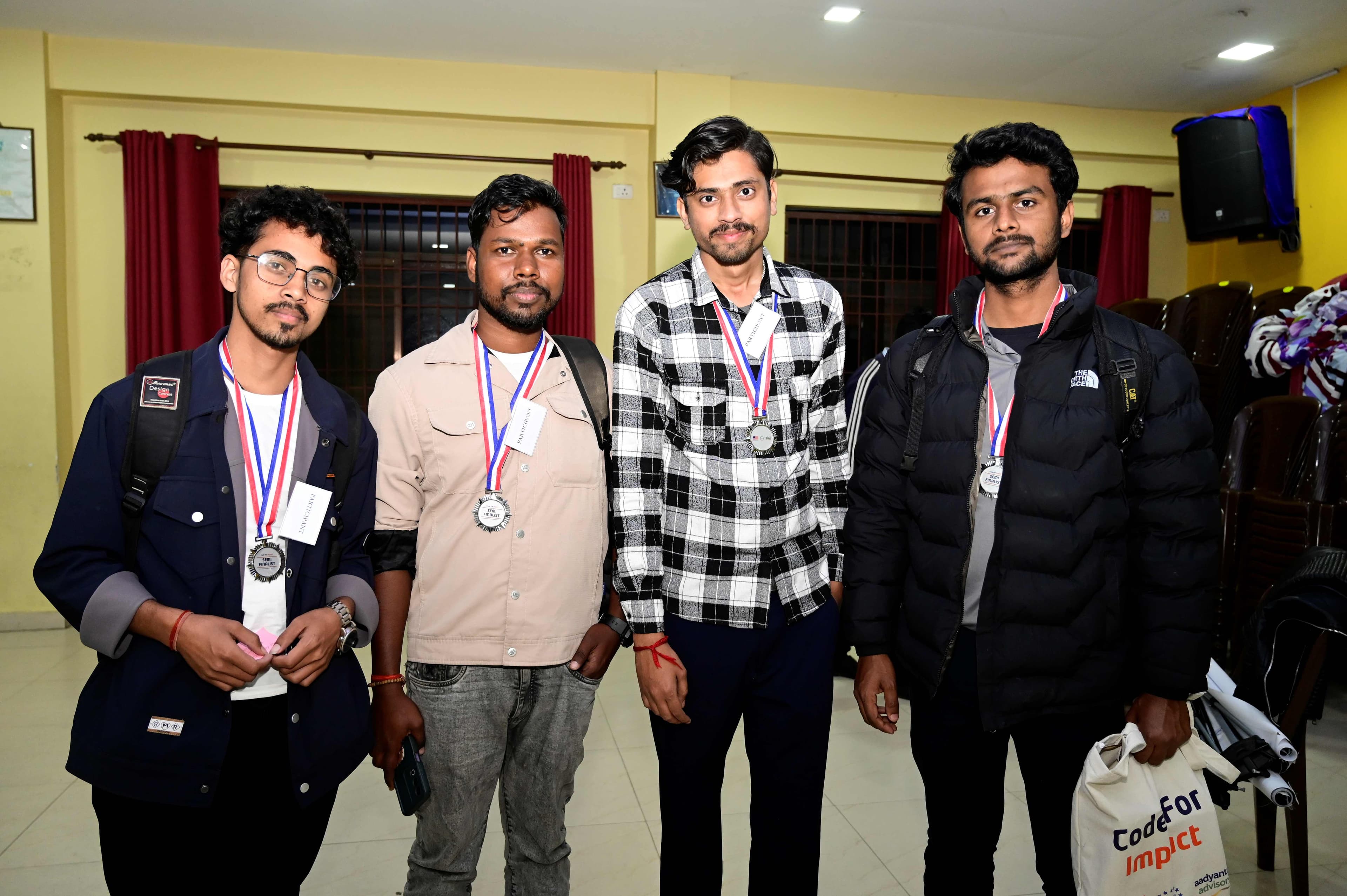
Fourteen teams progressed through structured mentorship, field validation, and iterative development across all seven provinces. From this cohort, seven teams have been selected for the national showcase in Kathmandu. All 14 remain part of the Code for Impact ecosystem.
Continuing Development
Teams continuing within the ecosystem with mentorship and validation support.
Galaxen
AutiSahara
A hybrid mobile and web platform. Parents use the app to complete standardised early screening (M-CHAT-R/F), follow structured daily activity checklists tailored to their child, track progress, and upload behaviour videos. Autism specialists use a web dashboard to review these inputs, provide personalised therapy plans, and monitor progress remotely — enabling consistent, affordable home-based support for families who cannot attend regular in-person sessions.
GOAT
Connecting Travelers to the Heart of Nepal
An integrated trekking and homestay platform that centralises verified routes and listings, offers offline maps and GPS, provides real-time risk analysis and safety warnings, and includes SOS-style emergency support. It also surfaces local food, culture, and homestay experiences with optional booking and payment flows, and multilingual support — aiming to improve both the traveller experience and the economic visibility of rural communities along Nepal's trekking routes.
Junior Dev
KhetAI
A “phygital” ecosystem that combines a solar-powered IoT field device with an AI-driven super-app. The device monitors soil moisture, NPK/pH, and field threats, and sends actionable alerts. The app includes a multilingual voice/video assistant (“Dr. Khet”), along with a marketplace and finance layer designed to use farm data to build farmer creditworthiness.
Meckshow
Meckshow
Digital health insurance claims solution that can simplify and digitize the insurance-claim process from the beginning reducing paperwork and making claims easier to process, and create value for all everyone.
Neuro
Neuro
A low-bandwidth infant vaccination tracking application for parents, designed to work well even on weak internet rather than as a fully offline-first product.
RX Sentinel
PharmaGuard
A cold-chain traceability system designed to create real-time accountability without relying on expensive IoT. The concept combines a low-cost time-temperature indicator sticker, a unique QR code for each pack or crate, and a mobile app that validates the product through a single scan or photo. The system records handoff events, verifies custody, and can flag temperature violations before compromised medicines move further down the supply chain.
Shiksha Sathi
EduMate
A role-based web SaaS with AI tools to generate assignments, slides, and MCQs, plus class analytics and student performance insights. The exact product direction is still being validated: slides vs. MCQs as the core feature, and whether the primary user is a student, teacher, or school, remain open questions that must be answered through research before further building.
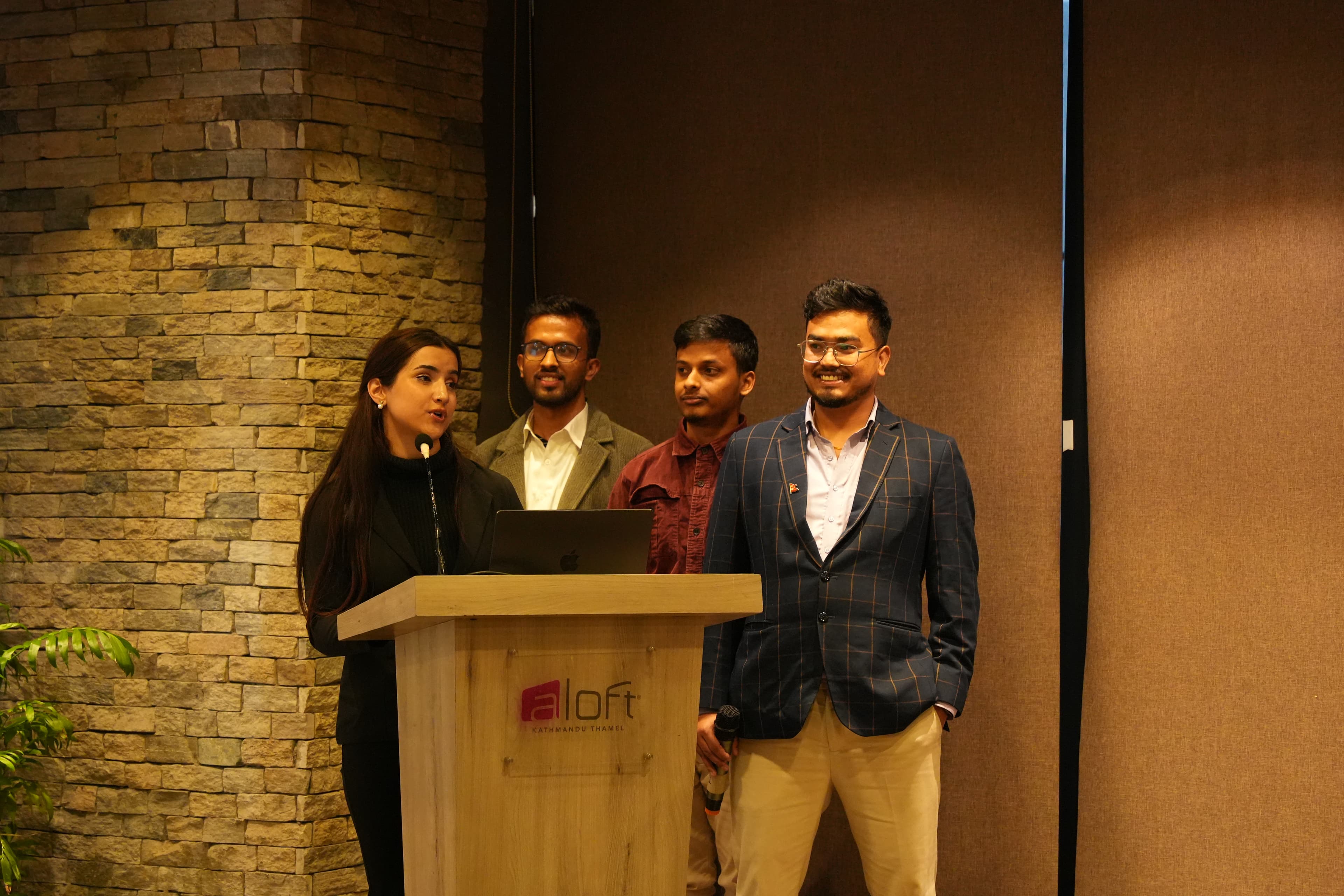
National Finalists
Selected through mentorship, validation, and field testing.
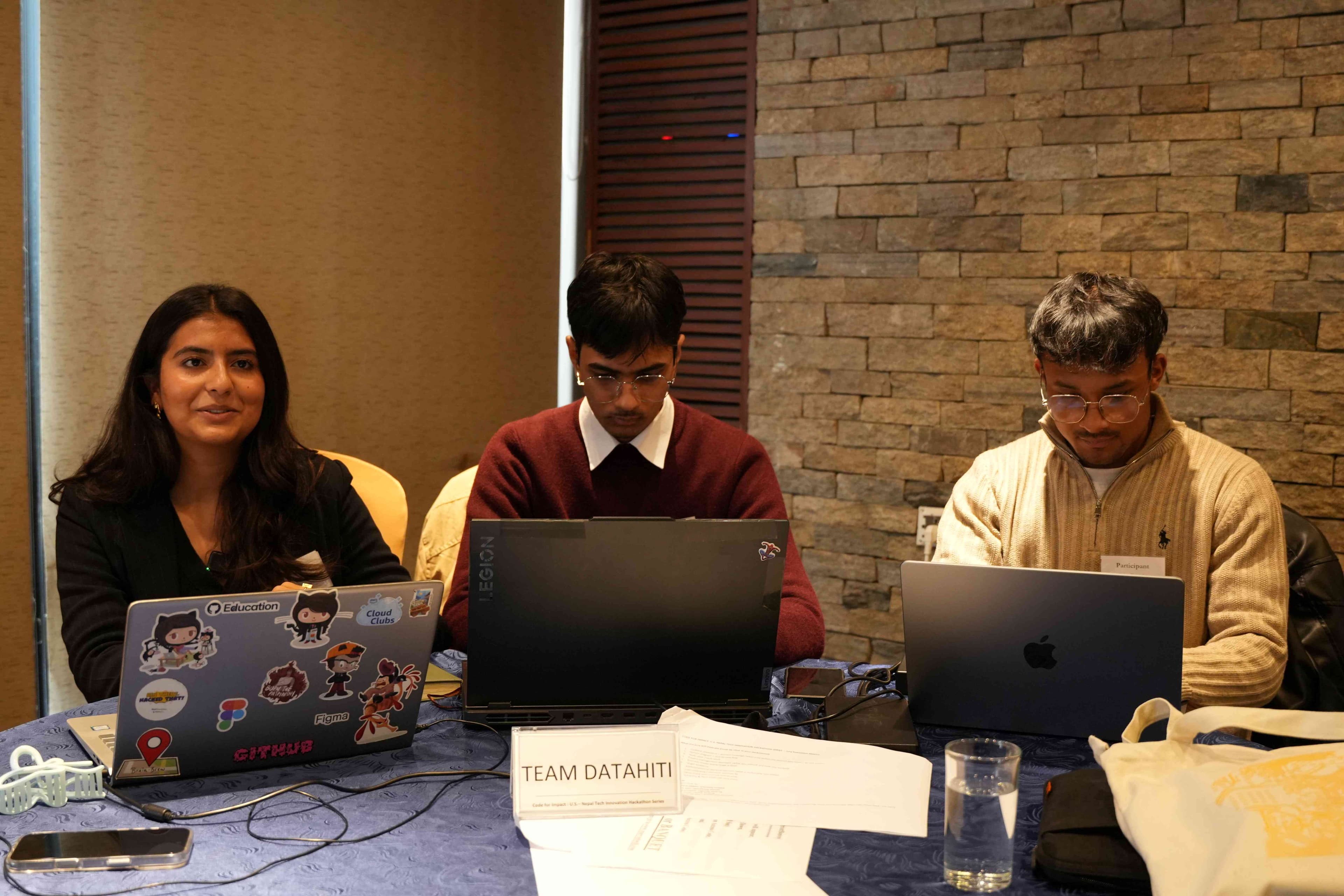
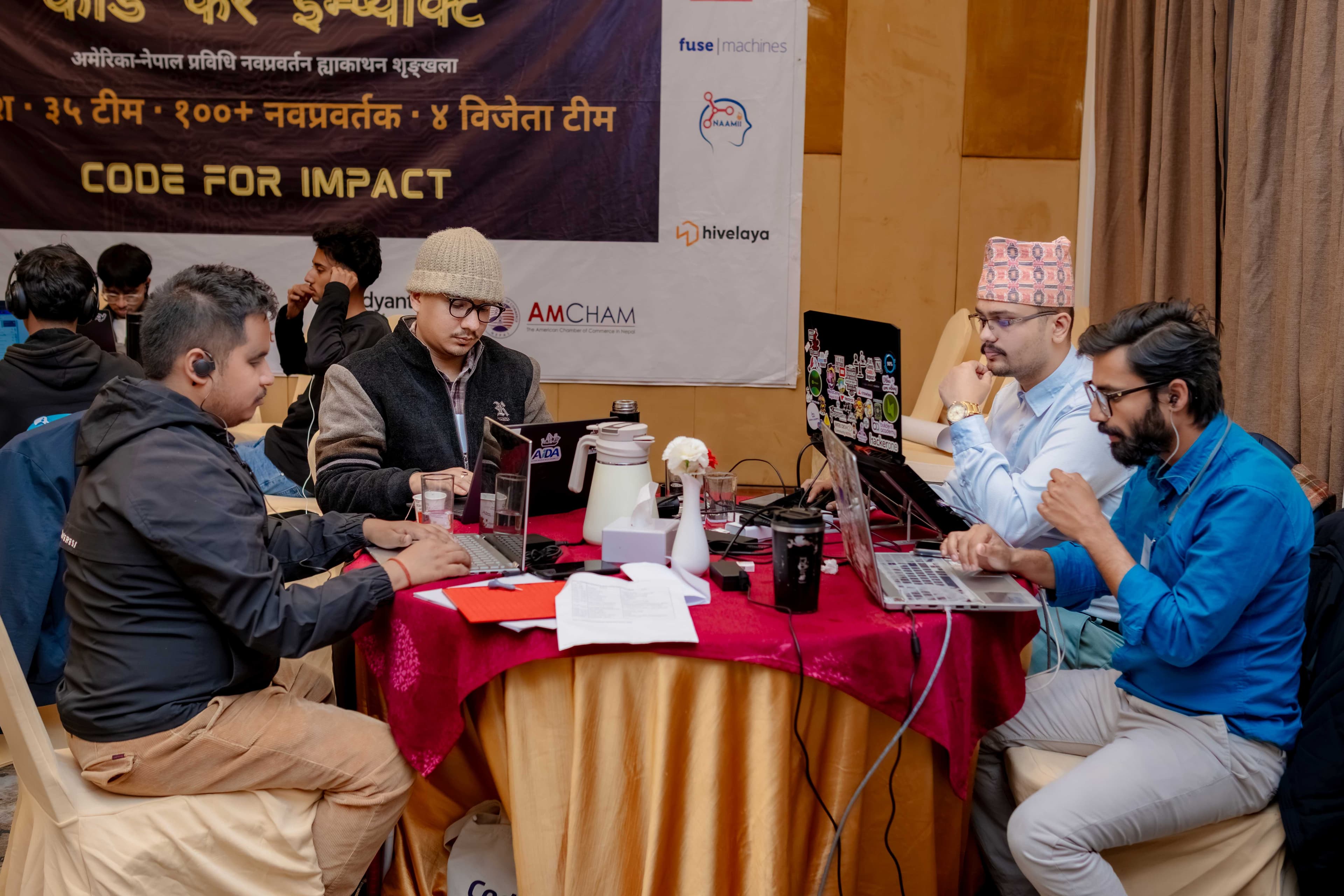
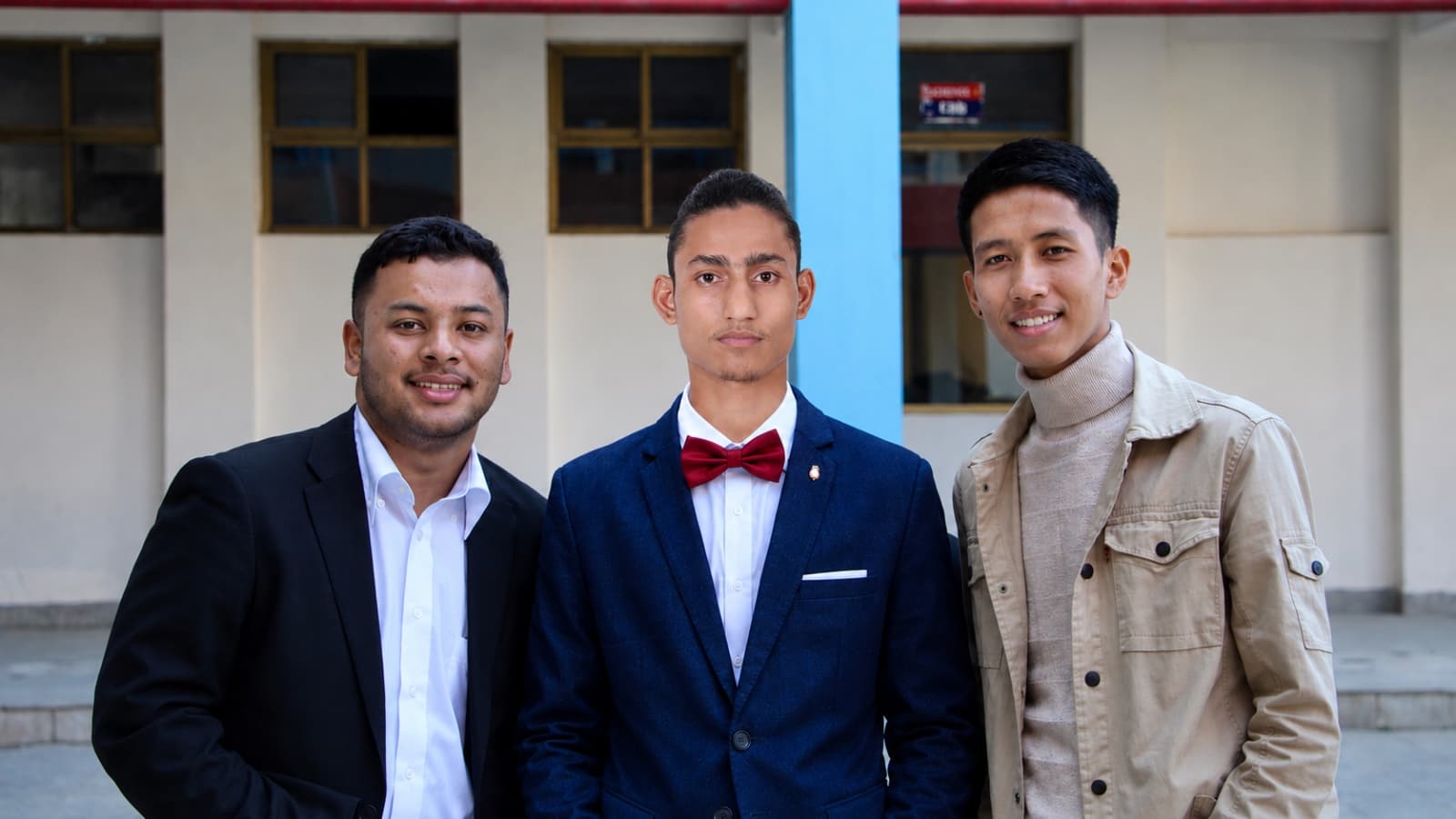
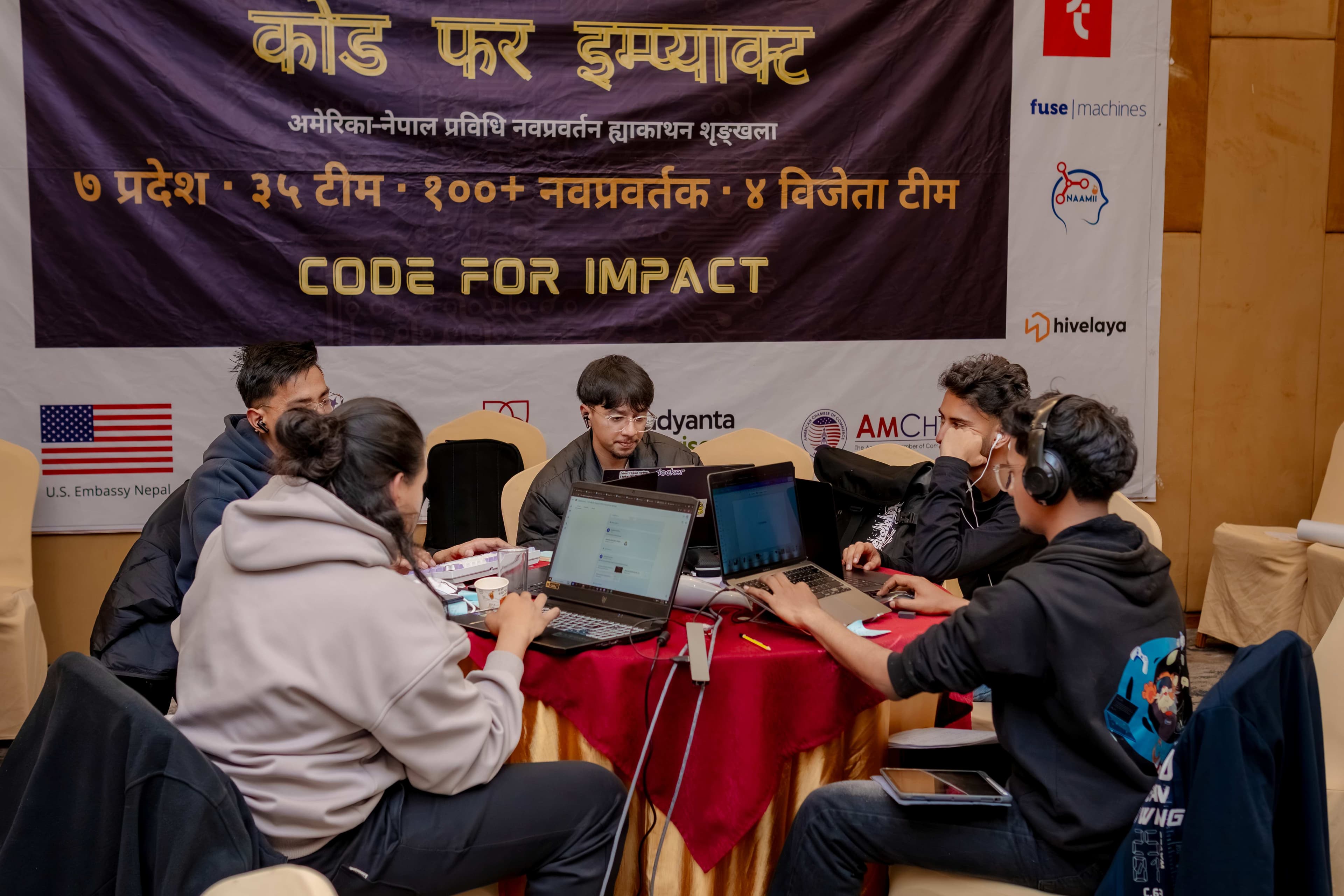
Building alongside practitioners
Mentors & Ecosystem Support
Code for Impact is shaped through ongoing engagement with mentors across Nepal's innovation ecosystem.
Teams work with sectoral experts in agriculture, health, tourism, technology, and finance, alongside builders and founders, through both structured sessions and on-demand support.
Mentorship is paired with real-world field validation, where teams test assumptions directly with users and potential customers. This ensures solutions are not only functional, but grounded in lived realities.
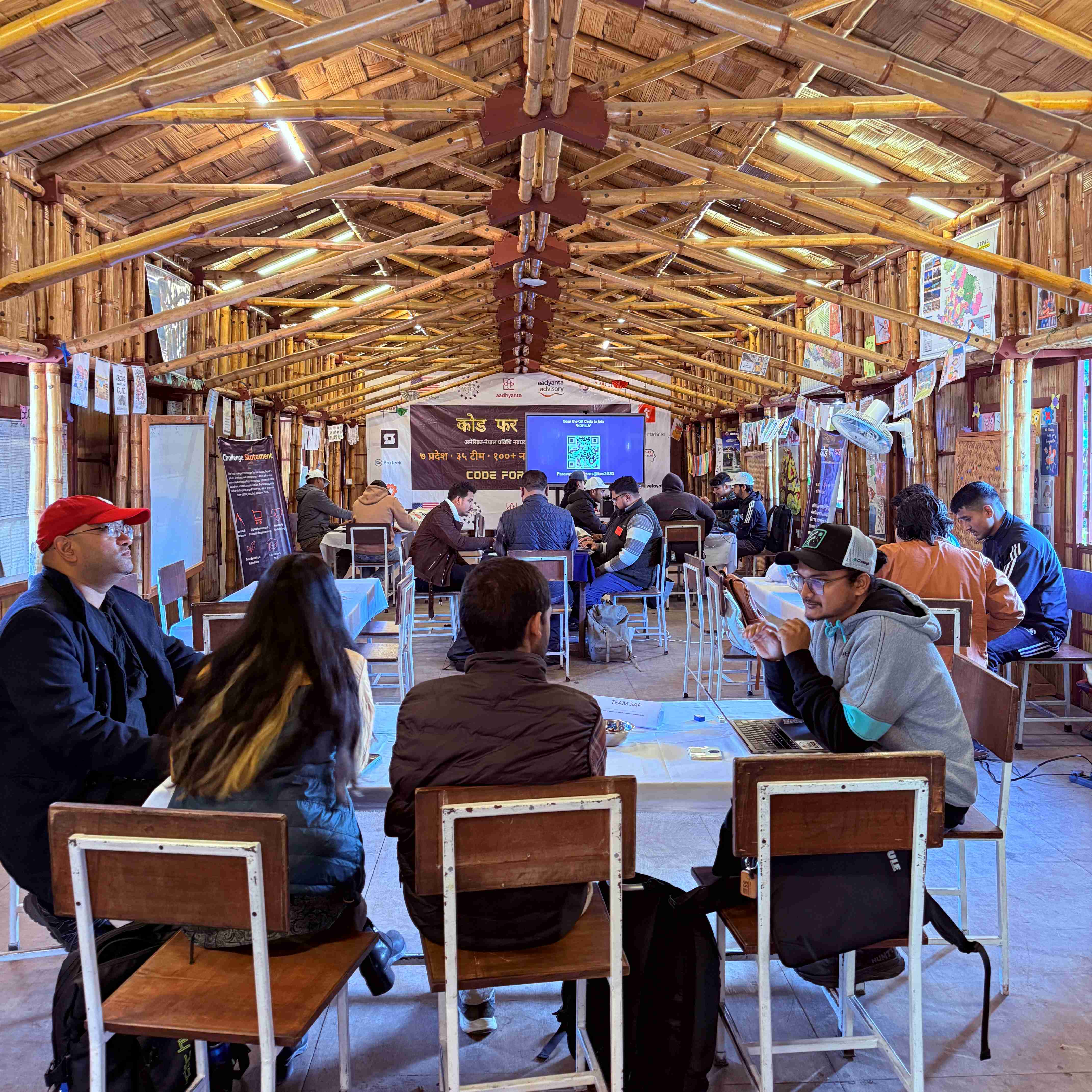
Karnali
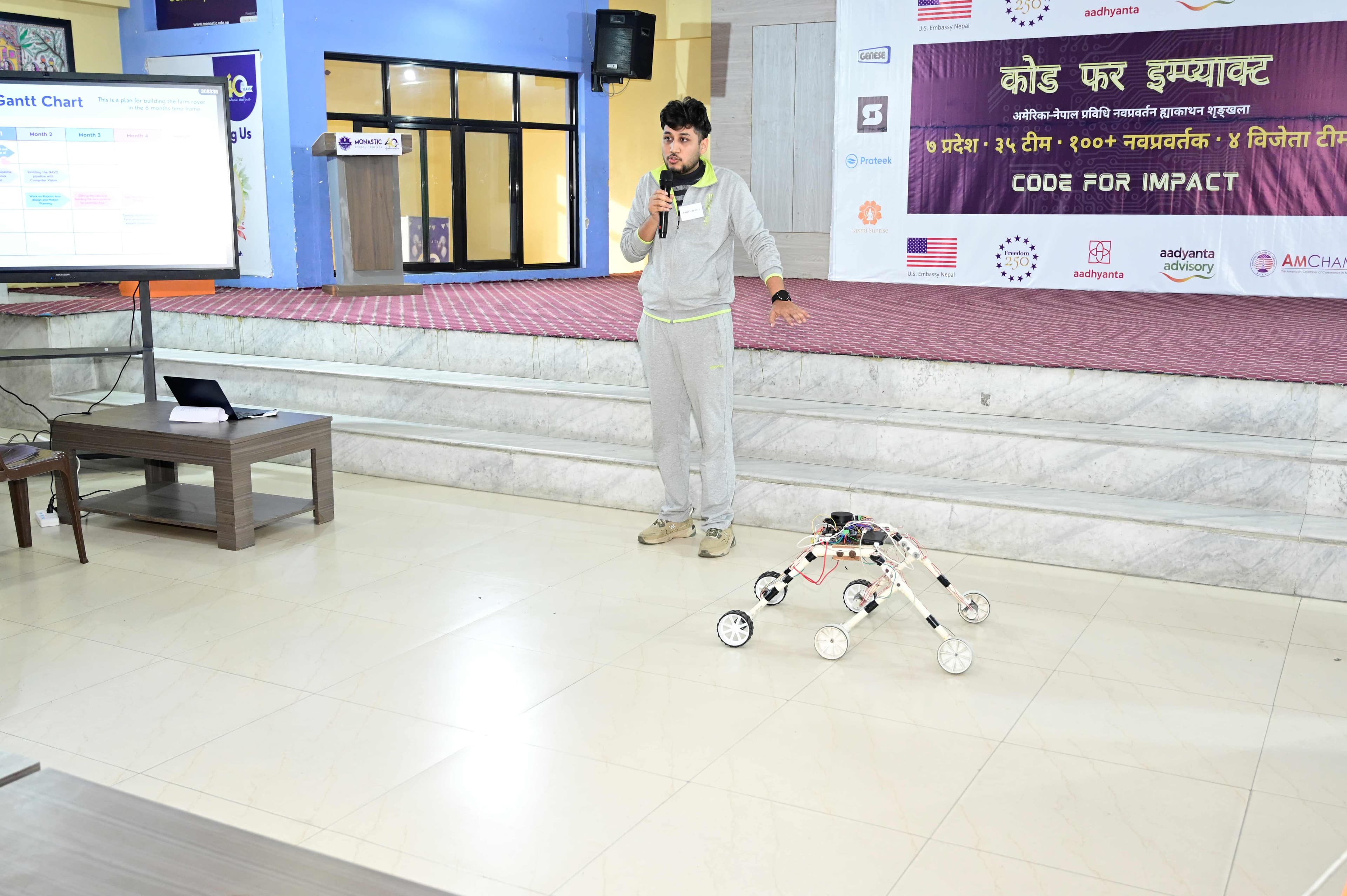
Madhesh
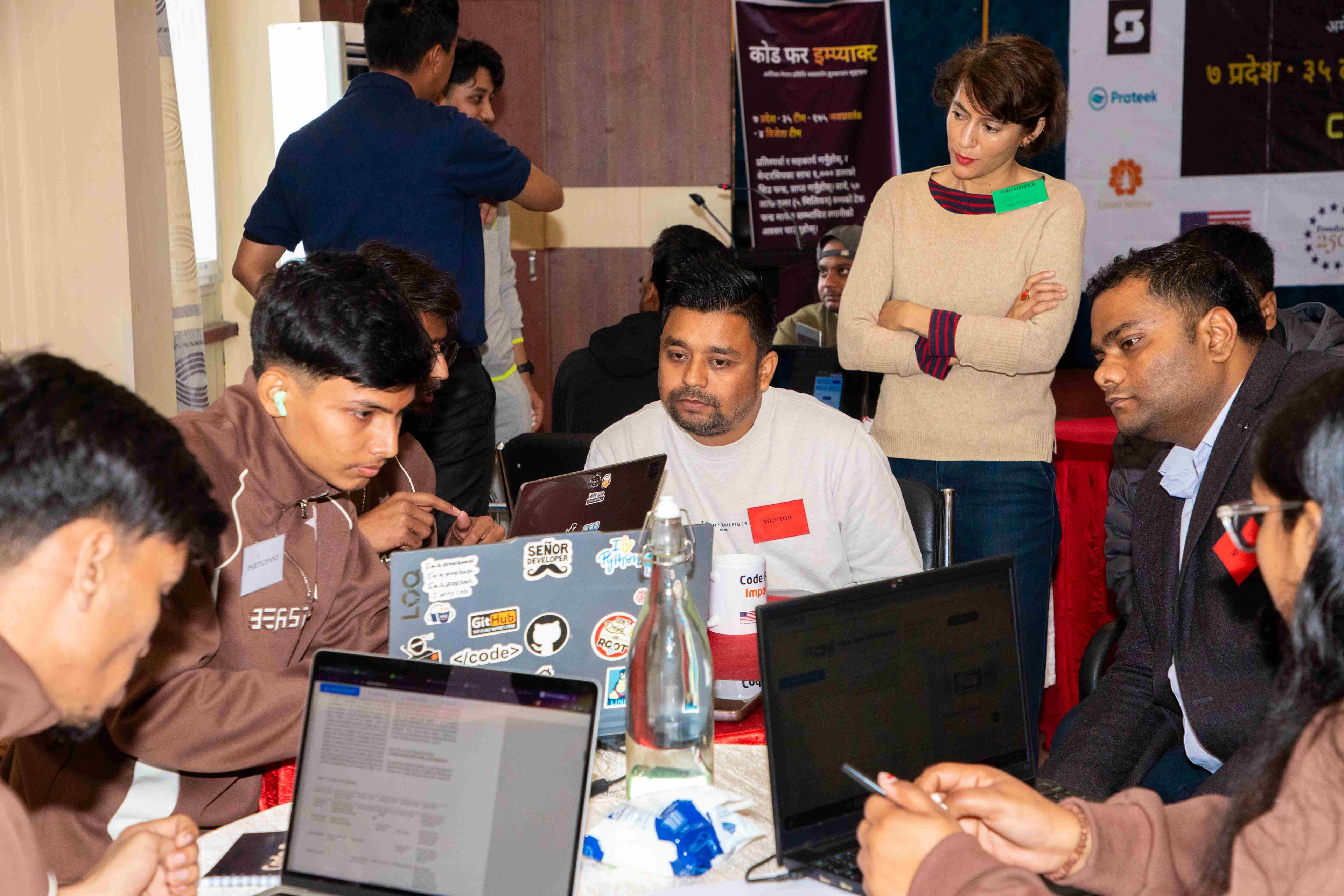
Madhesh
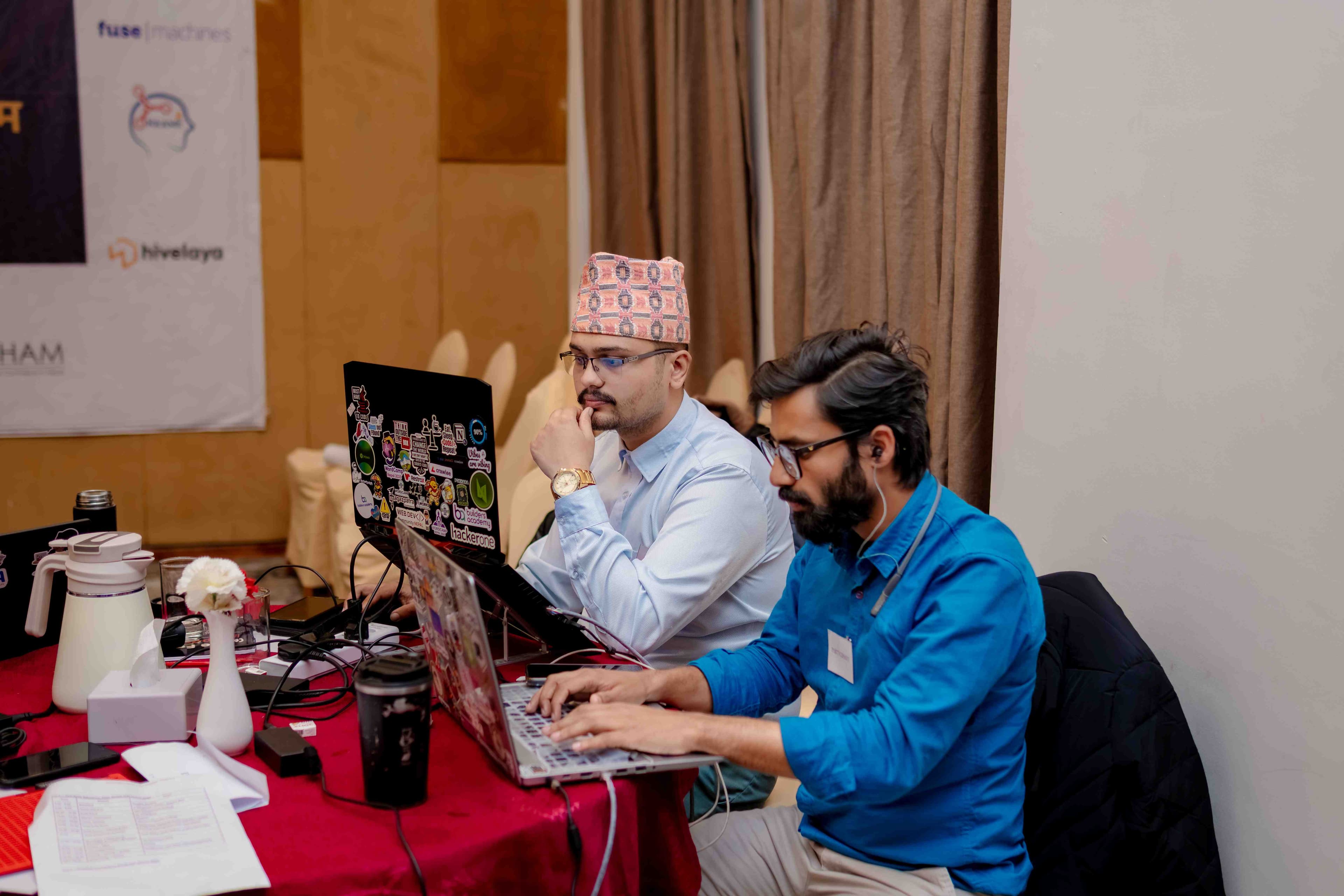
Gandaki
Gandaki
Bagmati
Sudurpashchim
Sudurpashchim
Lumbini
Lumbini
Koshi
Koshi
Bagmati
Follow the Journey
Code for Impact continues beyond selection.
From refinement to the national showcase, the journey is still unfolding.
Four teams will be selected as national winners in August 2026.
But the ecosystem built through this program continues beyond them.